
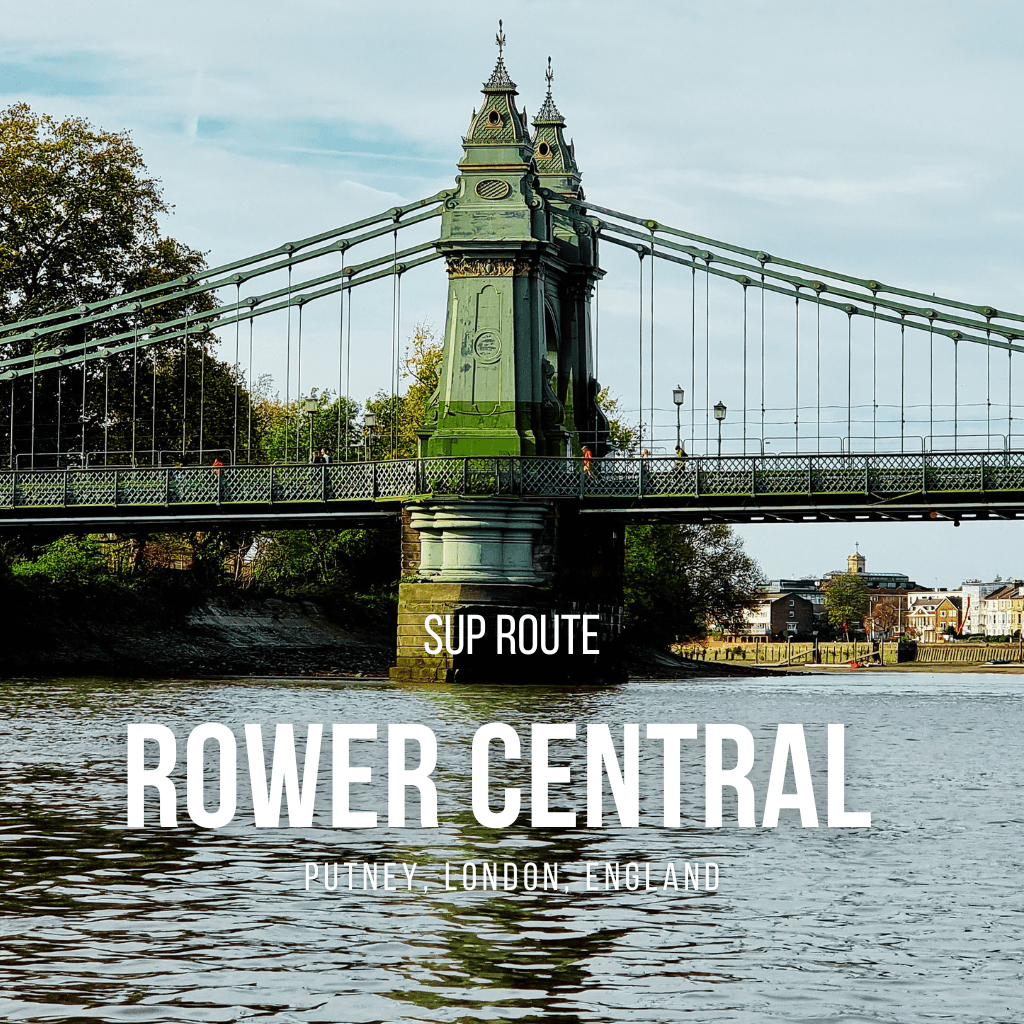
Rower Central
This SUP adventure took place on 29 October 2022
- Type: River (tidal)
- Location: Putney, London
- Style: Urban
- Buddy: Lou (independent)
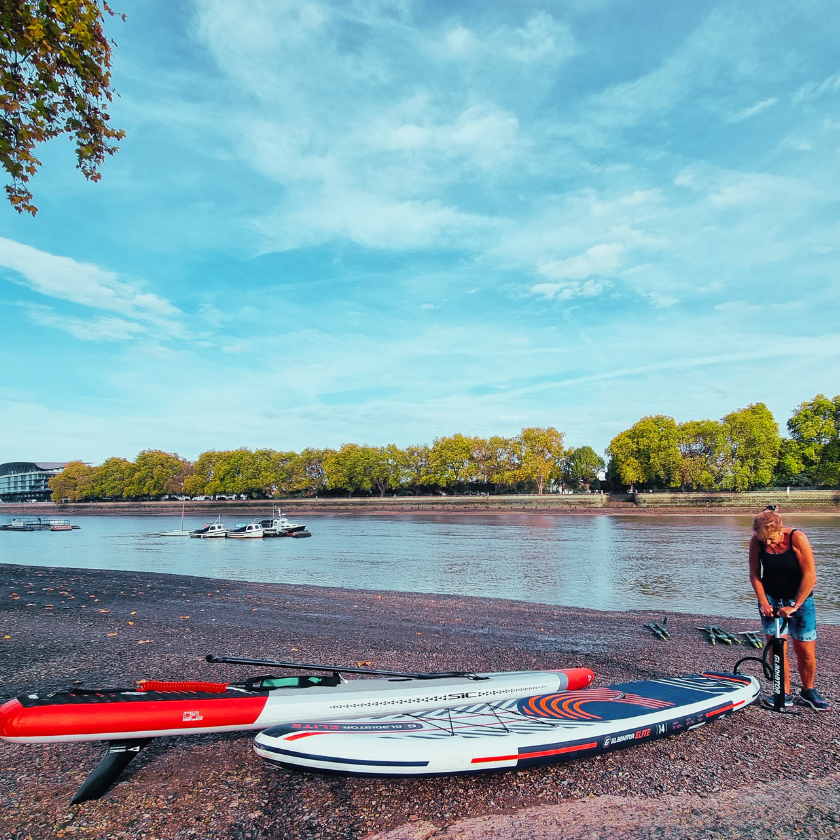
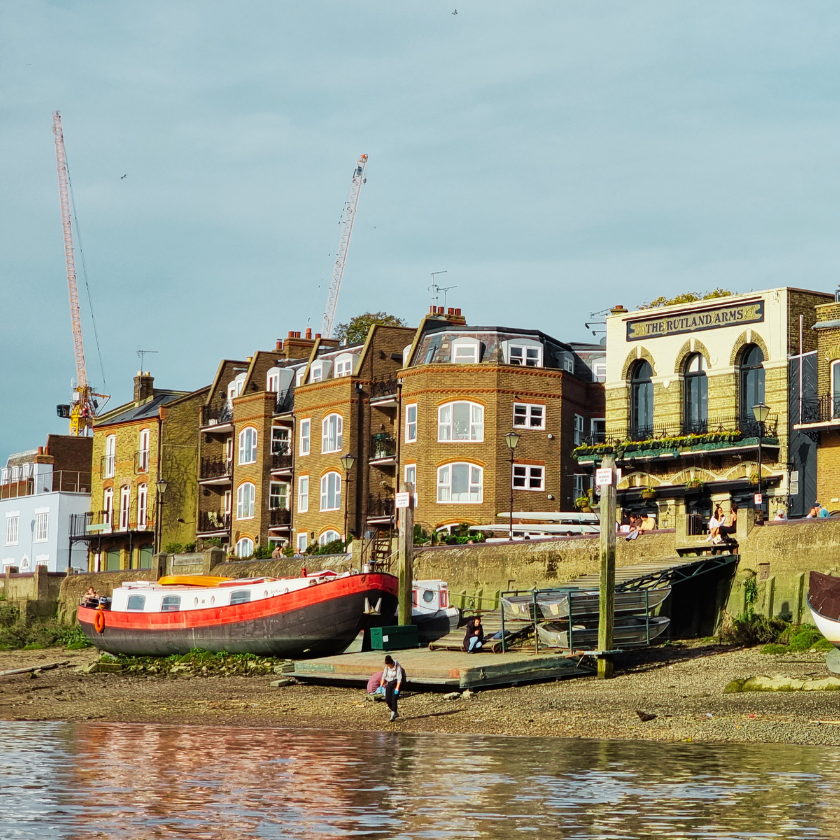
I travel to Putney on the District Line and walk to our launch point. So thankful for my wheelie bag! Like most Saturdays, the Embankment is heaving with rowing crews. Just before low water, the ebbing Thames has left the concrete slipway along the riverbank muddy and slippery. We pump up the boards and wait for the tide to turn before embarking upstream.
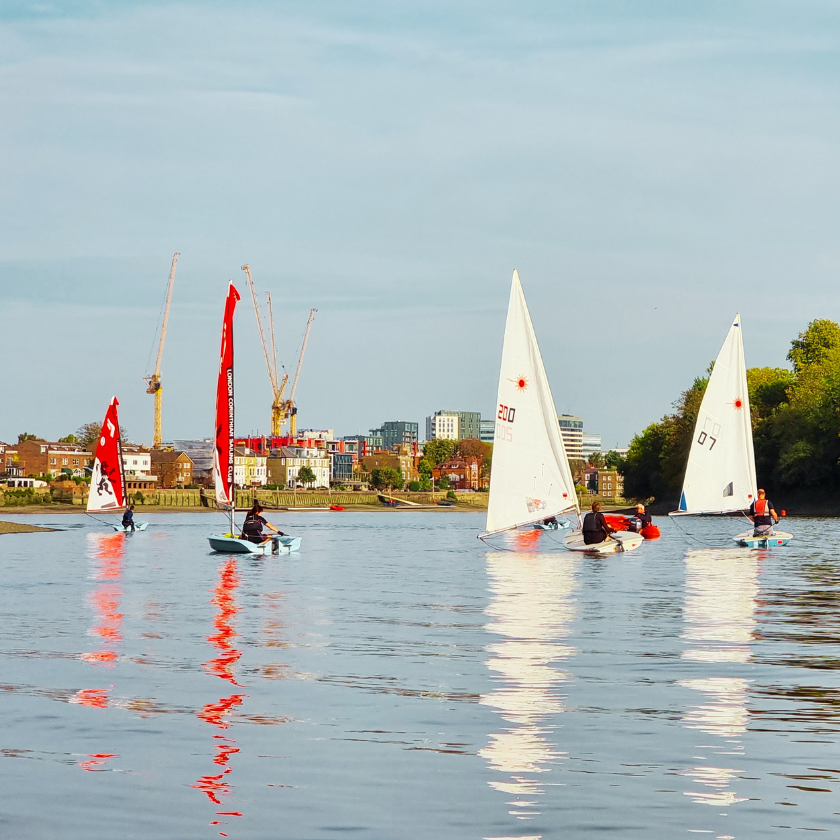
The Thames from Putney to Richmond is a beautiful stretch. The first part of our paddle follows the famous Boat Race course – Oxford v Cambridge, 6.8 km long, ending at Mortlake. It’s busy on the water today, so we shout a few “Rower, take a look!” warnings. Better avoid collisions with those oars! We also navigate our way around a group of small sailing boats and some agile kayakers.
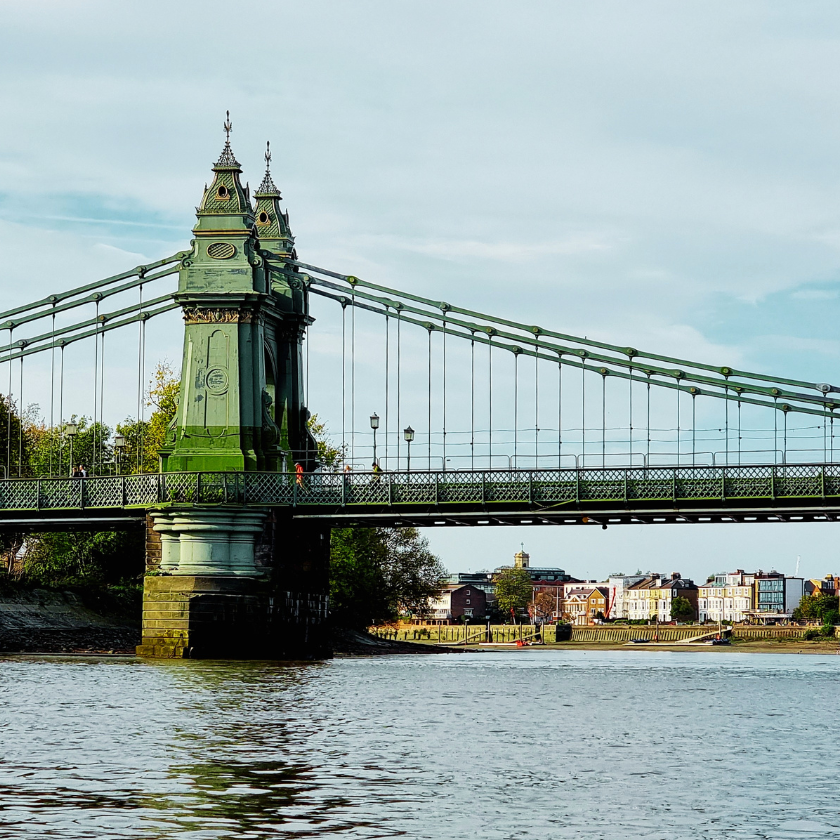
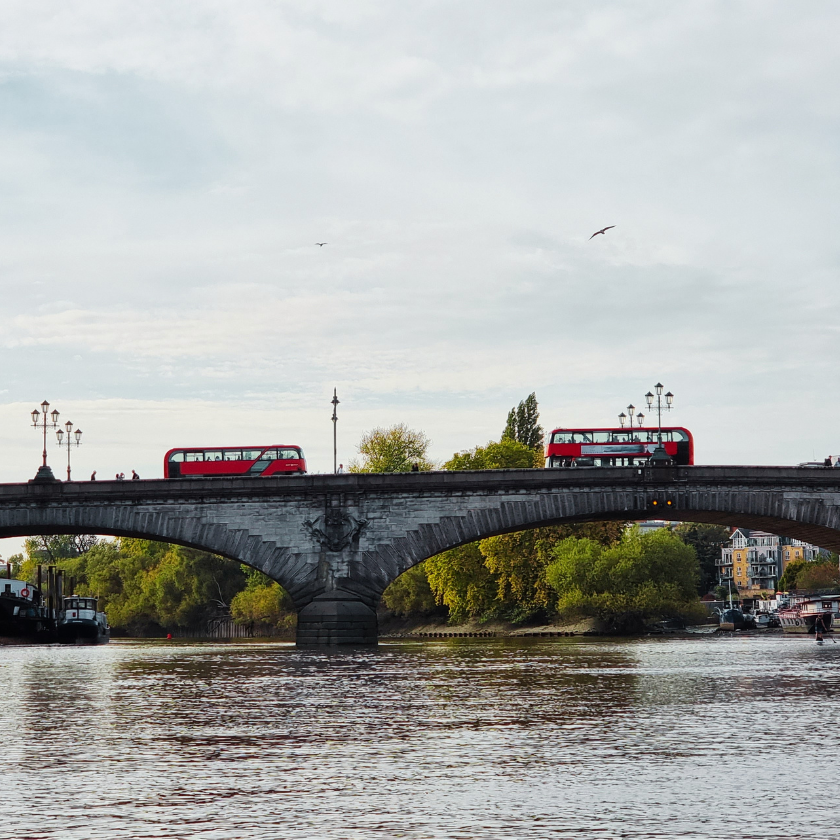
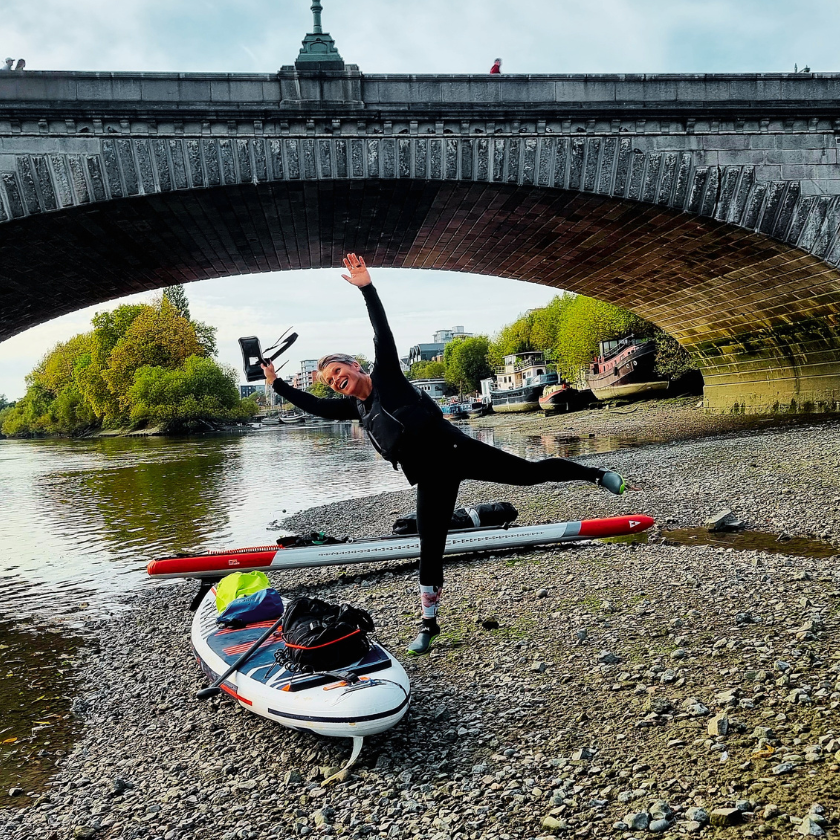
I’m obsessed with bridges. How lucky am I to have ten of them on this route? I take every opportunity to appreciate their architecture from the unique SUP vantage point. On this route, Hammersmith Bridge is one of my favourites. It was built in 1887. It is among some of the world’s oldest suspension bridges. Standing proud and green, it spans the river with gracefully curved arches.
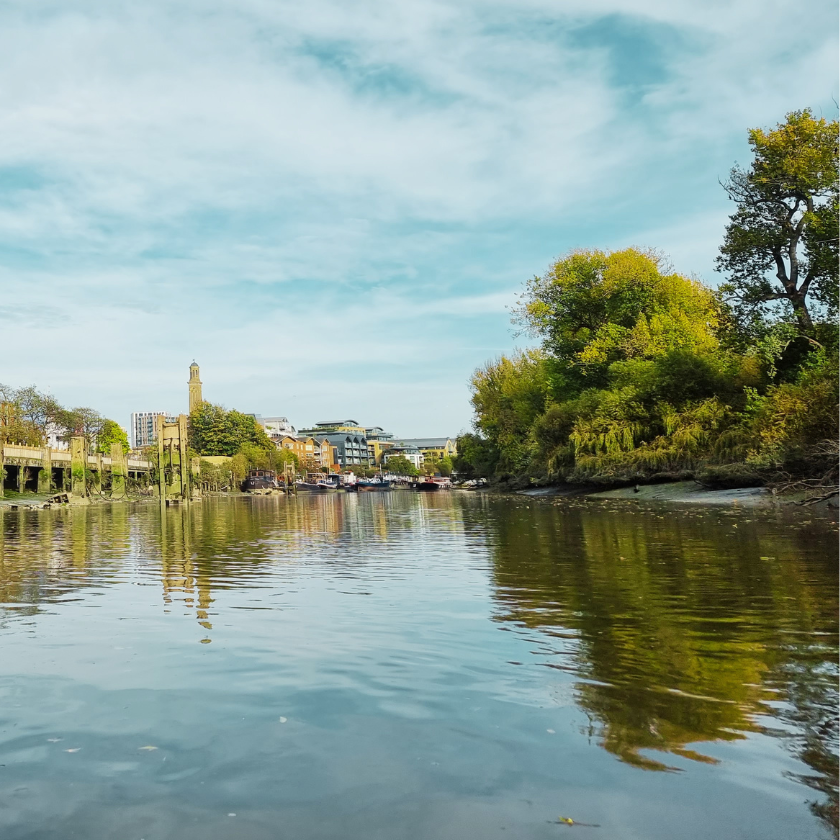
At Kew Bridge, we go off course to explore the Brentford Ait backwaters. These islands are like a bird sanctuary for kingfishers, swifts and herons. Shame for us, it’s too shallow at this tide and we must rejoin the main channel sooner than expected.
As we paddle upstream past Syon Park, helped with the incoming tide, we take a detour at Isleworth Ait. Another uninhabited island in the middle of the Thames. Covered in poplars and cypress trees, it is a Local Nature Reserve, and we are not allowed to set foot there. The reserve is a home for more than 50 bird species and two rare breeds of snail.
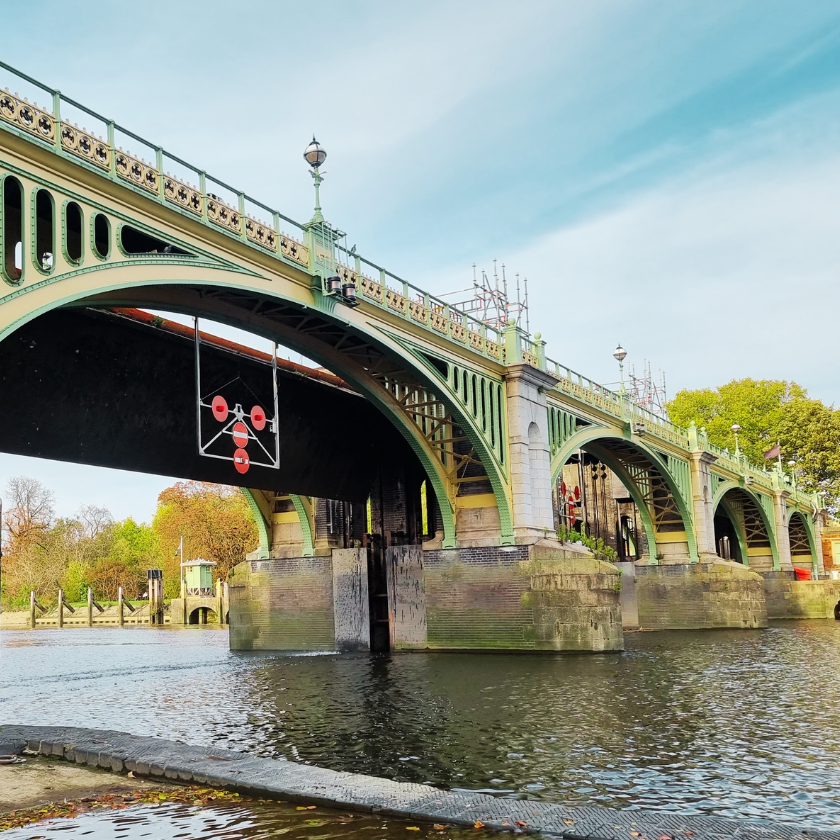
Finally, we reach Richmond Lock. There are red “Closed” arch signs and the weir gates are down, so portage it is! As soon as we’ve carried our boards over, the weir gates start rising. It’s such an impressive operation. Two arches are then open for navigation for about two hours on either side of high water.
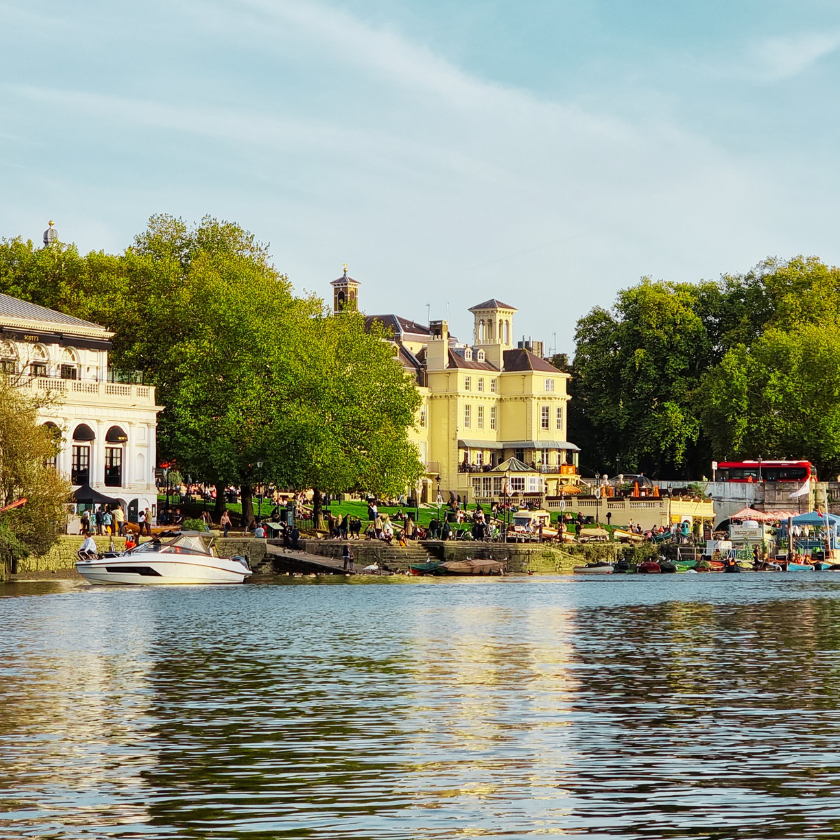
Lou is up for continuing further upstream, but I’m ready to get off, tempted by a glass of wine. We join hundreds of other people on Richmond riverside, enjoying the sunny day along this amazing river. So lucky to live here!
If you liked this story, check these out for the same stretch: From Barbell to Board (Richmond-Hampton Court) & Checklist for Safe Adventures (Richmond)
Weird & wonderful
- The many intriguing aits on this stretch of the Tideway. “Ait” simply means a small island in a river. Also known as an “eyot” or an “ayot”. Not sure you want to take pronunciation tips from me, but all three words are pronounced “ate”.
- Did you know that we owe the lush greenery on Brentford Ait to the royals who lived across the river in Kew Palace? King George III had a wall of trees planted on the ait to stop them from seeing the grimy, dirty side of industrial Brentford.
- Who doesn’t love snail facts? The two rare snail species on Isleworth Ait are the Two-Lipped Door snail and the German Hairy snail. The hairy one is thought to have arrived in Britain during the last Ice Age when Britain and mainland Europe were joined together. It had been presumed extinct here, but was found on the ait in the 1980’s. Phew!
Need to know
- Waterway: The Tideway is a part of the River Thames, downstream from Teddington Lock. It is subject to tides.
- Entry: Putney Embankment, London
- Exit: Richmond Riverside, Richmond
- Distance: 14 km, can be shorter or longer
- More details: Locks – Richmond Lock, Portages – 1 (if weir gates down), Authority – Port of London Authority, License – The Tideway Code

 My SUP Stories
Leave a reply to SUP Route: London Legacy Loop – My SUP Stories Cancel reply